By Dr. Nawaz Ahmad Khan, Professor, Acharya Narendra Deva University of Agriculture & Technology , Ayodhya, Uttar Pradesh
India has long been known as an agricultural nation. Even today, agriculture remains the backbone of the country’s economy, supporting millions of families directly and indirectly. However, Indian agriculture is no longer confined to producing food for domestic consumption. It is steadily becoming a global contributor through exports, innovation, and technology. In this evolving landscape, stronger agricultural cooperation between India and the United States presents a significant opportunity to improve farmers’ incomes and strengthen India’s position in the global agricultural market.
Indian farmers have earned worldwide recognition through their dedication and resilience. Products such as Basmati rice, spices, mangoes, grapes, pomegranates, organic produce, and several horticultural commodities have built a strong reputation in international markets. Better access to a large consumer market like the United States can create new export opportunities, generate higher returns for farmers, and contribute to the growth of India’s agricultural economy.
Over the past few years, the Government of India has introduced several initiatives to modernize agriculture and improve farmers’ competitiveness. Digital agriculture, drone technology, natural farming, micro-irrigation, Farmer Producer Organizations (FPOs), the Agriculture Infrastructure Fund, and policies promoting agricultural exports are helping create a stronger and more efficient farming ecosystem. As international partnerships expand, these reforms can unlock even greater opportunities for Indian farmers.
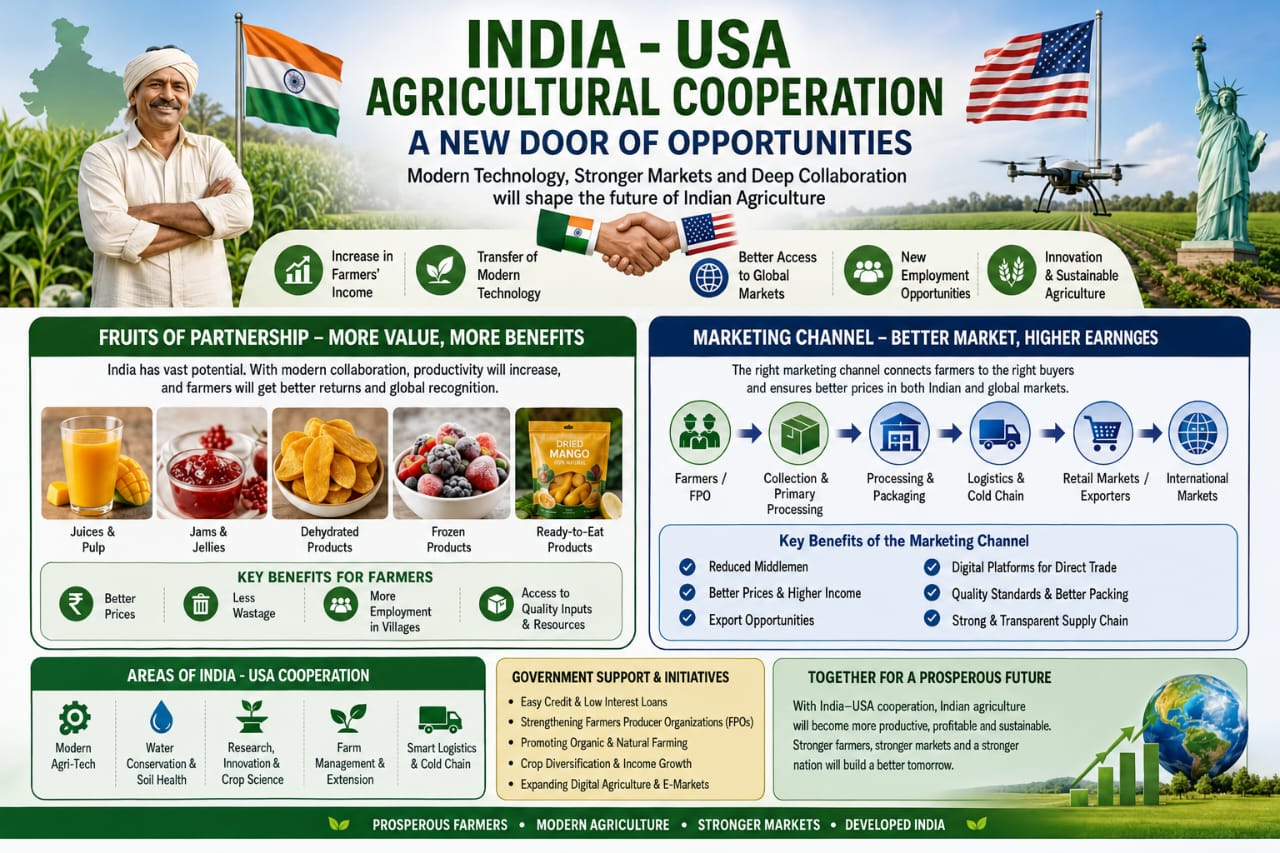
Agricultural cooperation between India and the United States extends well beyond trade. Both countries have much to gain through collaboration in agricultural research, advanced farming technologies, water conservation, seed development, crop management, food processing, and supply chain modernization. Greater access to innovative technologies can help Indian farmers improve productivity, reduce cultivation costs, and produce higher-quality crops that meet global standards.
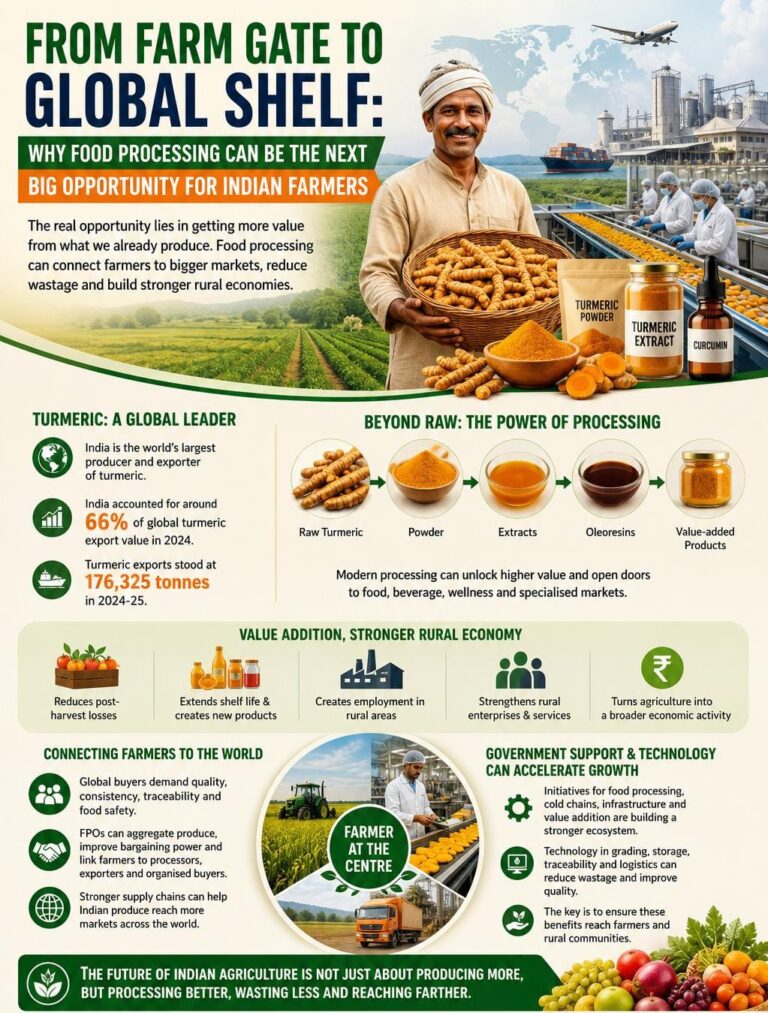
One of the most promising areas of collaboration is fruit processing. India is among the world’s largest producers of fruits, yet a considerable portion of its harvest is lost every year due to inadequate storage, transportation, and processing facilities. Expanding modern food processing infrastructure, cold chain networks, scientific grading, and packaging systems can significantly reduce post-harvest losses while increasing farmers’ earnings.
Fruits such as mangoes, bananas, grapes, oranges, pomegranates, guavas, and litchis offer enormous opportunities for value addition. Processing these into juices, fruit pulp, jams, jellies, frozen products, dehydrated fruits, and ready-to-eat foods can create access to premium domestic and international markets. Besides improving farm incomes, this would encourage investment in rural food processing industries and generate employment opportunities across agricultural regions.
Equally important is the need to strengthen agricultural marketing channels. Producing more is only one part of the equation; ensuring farmers receive fair prices through reliable market access is equally critical. Collaboration between India and the United States can accelerate the development of modern agri-logistics, digital agricultural marketplaces, e-commerce platforms, traceability systems, and globally accepted supply chains.
Farmer Producer Organizations (FPOs), cooperatives, and private enterprises can play a larger role in connecting farmers directly with food processing companies, supermarket chains, exporters, and international buyers. Such integration would reduce dependence on intermediaries, improve price realization, and make Indian agricultural products more competitive in global markets. Investments in branding, quality certification, attractive packaging, and value-added products can further strengthen India’s reputation as a trusted supplier of premium agricultural produce.
The global food industry is increasingly shifting toward sustainable and environmentally responsible production. India has already taken meaningful steps by promoting natural farming, efficient water management, and climate-resilient agricultural practices. At the same time, the United States has considerable expertise in agricultural innovation, precision farming, and scientific research. Combining these strengths can help develop farming systems that are both productive and environmentally sustainable.
India’s greatest agricultural advantage lies in its diversity. Different climatic zones and soil conditions allow farmers to cultivate a wide range of crops throughout the country. This diversity gives India a unique competitive advantage in global agricultural trade. By simplifying export procedures, strengthening quality standards, and providing farmers with better technical support and training, India’s agricultural exports can expand significantly in the coming years.
The Government of India is also placing increasing emphasis on agricultural infrastructure, cold storage facilities, logistics, and value addition. These investments are creating stronger market linkages while reducing post-harvest losses. Better coordination between the Central and State Governments in promoting agricultural exports can further position India as one of the world’s leading agricultural trading nations.
This is an important moment for Indian agriculture. With supportive government policies, expanding global partnerships, and rapid technological advancements, farmers are better positioned than ever before to participate in international markets. The growing agricultural relationship between India and the United States is not merely about trade—it is about creating long-term opportunities for farmers, strengthening rural economies, and building a more resilient agricultural sector.
When Indian farmers gain access to global markets, modern technology, and stronger value chains, the benefits extend far beyond agriculture. Rural industries grow, employment opportunities expand, and local economies become more resilient. Such progress contributes not only to farmers’ prosperity but also to India’s broader vision of inclusive economic development and a Viksit Bharat.
The future of Indian agriculture lies in combining the hard work of its farmers with innovation, global partnerships, and forward-looking policies. With the right support and sustained collaboration, India’s farming community can confidently move towards a more prosperous and sustainable future.